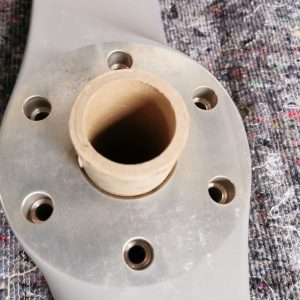
New, Never Installed offers replacement and project value for buyers seeking an unused fixed-pitch propeller with clear manufacturer identification and documented storage history.
The Sensenich Propeller P/N 74DM6-0-60, Sensenich 74DM6 Propeller, and 74DM6-0-60 Aircraft Propeller descriptions identify closely related searches for this specific aviation component.
These related phrases connect the product with buyers seeking a durable and comparatively straightforward general aviation propeller design.
A 74-Inch Aircraft Propeller and 60-Inch Pitch Propeller should be confirmed through manufacturer markings, approved data, and suitable measurement rather than model interpretation alone.
A Replacement Aircraft Propeller must match the approved aircraft, engine, hub, bolt pattern, spinner, diameter, pitch, and operating limitations.
Confirming the Exact Aircraft Propeller
Every digit, letter, dash, suffix, alteration stamp, and serial marking should be recorded because similar-looking propellers can have different applications or dimensional configurations.
The buyer should determine whether the propeller remains read more in its original manufactured configuration or has undergone any pitch adjustment, diameter reduction, refinishing, inspection, trial fitting, repair, or alteration.
Understanding New-Old-Stock Propeller Status
The seller should disclose the purchase date, ownership history, storage environment, packaging condition, and any previous trial fitting.
Any temporary mounting or dimensional checking should be disclosed clearly.
How a Fixed-Pitch Aluminum Propeller Operates
Correct matching protects the engine, propeller, and aircraft from unsuitable loading or operation.
Diameter influences ground clearance, tip speed, aerodynamic load, and airframe compatibility.
Benefits of Metal Propeller Blades
Professional inspection helps preserve the long-term value of the Sensenich Aluminum Propeller.
Both blade faces, backs, roots, tips, leading edges, trailing edges, and hub transitions should be examined under suitable lighting.
Understanding Diameter and Aircraft Clearance
The 74-inch diameter description should be confirmed through the complete model designation, manufacturer data, available records, and suitable physical measurement.
Professional measurement supports the responsible use of the 74-Inch Aircraft Propeller.
Verifying the 74DM6-0-60 Pitch
The 60-inch pitch designation is an important specification that should be verified through model markings, suitable technical data, and professional measurement when required.
Professional pitch evaluation protects the Sensenich 74DM6-0-60 Propeller.
Selecting an Approved Propeller Installation
A propeller approved for one O-320-powered aircraft may not be approved for another aircraft using a different engine variant, airframe, spinner, or installation configuration.
Aircraft modifications, engine conversions, supplemental approvals, spinner changes, cowling alterations, and landing-gear configurations may influence propeller eligibility or clearance.
Two-Blade Aircraft Propeller Configuration
Shipping damage or improper storage affecting one blade can influence the balance and suitability of the complete propeller.
Storage supports should protect both blades without applying uneven pressure.
Preparing the Replacement Aircraft Propeller
The propeller hub should match the receiving engine flange, pilot diameter, bolt pattern, approved spacer arrangement, spinner components, and required installation hardware.
The propeller should never be drilled, forced, or modified to fit an incompatible engine flange.
Checking a New Sensenich Propeller
The leading edges should be inspected for dents, scratches, gouges, corrosion, coating damage, packaging abrasion, and transportation impact.
Trailing edges and blade tips should remain free from bending, cracking, deformation, edge damage, and inconsistent contour.
Corrosion Inspection and Storage History
The hub, bolt holes, blade roots, edges, and areas beneath packaging deserve particular attention.
Periodic inspection can identify developing coating or environmental concerns.
Understanding Approved Propeller Design
The Certified Aircraft Propeller description generally refers to a propeller design manufactured under applicable approved production and certification standards.
All documents should remain permanently associated with the correct physical propeller.
Maintaining Aircraft Propeller History
Conflicting or incomplete identification should be resolved before payment or installation.
Paperwork should not be interpreted beyond its actual scope or current relevance.
Buying the Sensenich 74DM6-0-60
The seller should provide photographs of both sides of each blade, leading edges, trailing edges, tips, hub, mounting holes, data plate, packaging, and any damaged areas.
- Resolve identity, applicability, dimensions, condition, and package-completeness questions before payment.
- Confirm the manufacture or purchase date, storage duration, environmental conditions, preservation method, ownership history, and absence of operating time.
- Inspect and photograph the propeller immediately after delivery before cleaning, measuring, balancing, repairing, mounting, or modifying it.
Aircraft Propeller Crating Requirements
The propeller should be packaged in a rigid crate or container that supports the hub and protects both blades from bending, impact, abrasion, and uncontrolled movement.
The shipping crate should identify appropriate lifting and handling points so carriers do not use the propeller blades as handles.
Storing the 74DM6-0-60 Propeller
The propeller should not be placed where tools, vehicles, machinery, or personnel can strike it.
Organized storage supports the commercial value of the General Aviation Propeller.
Installing the Sensenich 74DM6-0-60
The technician should verify the complete model, serial number, diameter, pitch, hub, flange, bolt pattern, spacer arrangement, mounting hardware, torque procedure, and installation eligibility.
The propeller should seat correctly against the approved mounting arrangement without rocking, binding, forced alignment, or surface contamination.
After installation, technicians should verify security, propeller clearance, blade tracking, spinner alignment, hardware condition, and surrounding aircraft components before starting the engine.
Protecting Long-Term Propeller Condition
Cleaning should use suitable materials and methods that do not attack aluminum, coatings, markings, or data plates.
Preventive care supports dependable General Aviation Propeller service.
Commercial Value of a New Sensenich Propeller
Original packaging can improve presentation and provenance but does not replace physical examination.
Buyers should compare complete and documented propeller packages rather than price alone.
Selecting a General Aviation Replacement Propeller
The Sensenich Propeller – P/N 74DM6-0-60
The unit should not be judged solely through original packaging, clean factory paint, new wording, never-installed status, or purchase price.
Whether the product is described as a 74-Inch Aircraft Propeller, 60-Inch Pitch Propeller, Lycoming O-320 Propeller, or General Aviation Propeller, aircraft-specific applicability remains essential.
With prompt attention to scratches, coating damage, corrosion, vibration, loose hardware, spinner concerns, impact events, and environmental exposure, the installation can preserve its operating potential.